

Having accurate herd records is one of the most challenging aspects of managing a beef business. It isn’t easy; you don’t always get clean musters, some don’t like staying in the paddock they were put in, they change classes, they reproduce and they also die in unknown numbers.
However, there is a lot of value tied up in herd inventories and accurate herd data is required to know how your herd is performing and what opportunities there are to improve herd performance. Therefore, it is important to get it right.
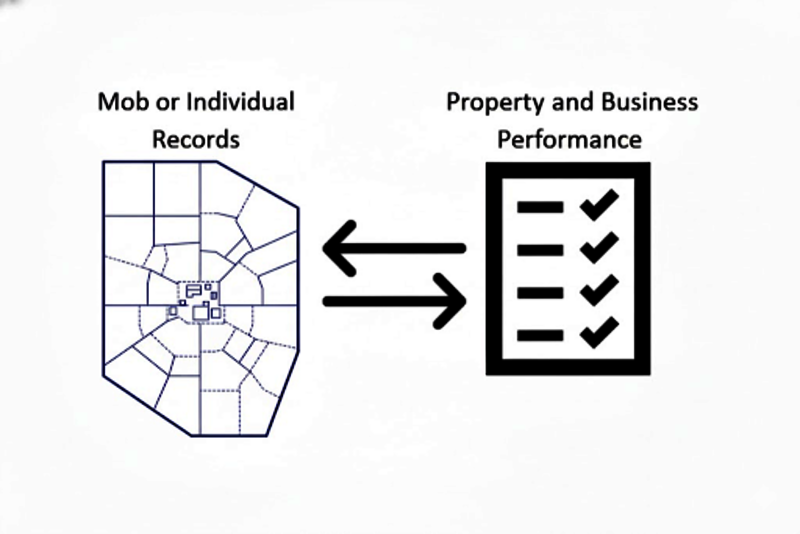
We have observed that those with a good understanding of their herd numbers and herd performance effectively manage their herd records in two ways: at mob level and at property level.
Paddock or mob level data tells them how many of what type of animals should be in every paddock at any time and can contain key management events such as joining, branding/marking or mob/paddock treatments. When mustered, any animals missing or any extras are recorded and kept track of in different ways. Individual animal data can complement this information, detailing treatments, live weights, pregnancy status/history, phenotypes and/or genotypes. It is important that sales and assumed deaths can be filtered from individual data, so that the individual data can inform paddock and property level insights.
Business or property level records serve a different purpose to the paddock or individual records. They record the best estimate of total numbers on hand for the whole business. The business level records capture all movements on and off the property (or enterprise), capturing all purchases, natural increase, transfers (to and from other properties and enterprises), sales and an estimate of deaths. We suggest deaths be estimated based on long term average annual mortality rates for each group of animals. Accounting for only known deaths may result an overestimate of herd numbers.
The paddock records and business records should ‘roughly mirror’ themselves over time. This is done by annually adjusting the deaths estimate in the business records to get numbers recorded to correspond with the best estimates of those animals on hand. This is best done either at the end of each year, or at the point during the year that you have the most confidence in your numbers. Don’t pull your hair out trying to get the two sets of records to match after every transaction. If the purpose and benefits of each record type is understood then both can add value to your business. They should match over time, but not be exactly the same all of the time.
The business level records should reconcile the herd over the year, that is they should detail what was on hand at the start of the year, all movements on and off during the year and the numbers on hand at the end of the year. These numbers should reconcile across the year, in total and by group, and the numbers on hand at the start and end of the year should reflect the best estimate of actual numbers on the ground at that time.
Closing=Opening + Purchases + Natural Increase +/- Transfers - Sales - Deaths
Keeping track of numbers, in any form, requires clarity around livestock groupings. Ambiguous and inconsistent class names are a major contributor to inaccurate herd numbers in the industry. We suggest using the following categorisations of animals;
- AgeYear (the year corresponding to the brand &/or tag colour used)
- Sex (female, castrate or bull)
- Reproductive Status (reproducing or non-reproducing)
These three groupings are unambiguous and do not frequently change, i.e. post castration, AgeYear and Sex will not change and reproductive status should only change once. These categorisations provide for a much clearer way of keeping track of livestock groups than deciding when animals stop being weaners and having to reclass them to steers and heifers.
This approach is detailed within the Australian Herd Classification Guidelines. The most important aspect of which is clarifying how you apply the AgeYear within your business. The AgeYear of the animal (i.e. #25) is the brand or tag colour applied to each drop of animals. There is an industry standard cycle of tag colours that can be applied for consistency. The guidelines formalise what many producers are already doing to manage their livestock. Generally, in the North, the AgeYear is the financial year that a calf is born in whereas in the south it is the calendar year of birth.

To address the challenge of recording and reporting on business and property herd records, we have developed HerdFlow® using the Australian Herd Classification Guidelines as a foundation. HerdFlow is an online platform for standardised recording of high-level herd data. It provides users with accurate and accessible herd data and performance measures, which provide insights to make decisions with confidence.
To find out more about how HerdFlow can assist in understanding your herd performance, please click the logo below.


